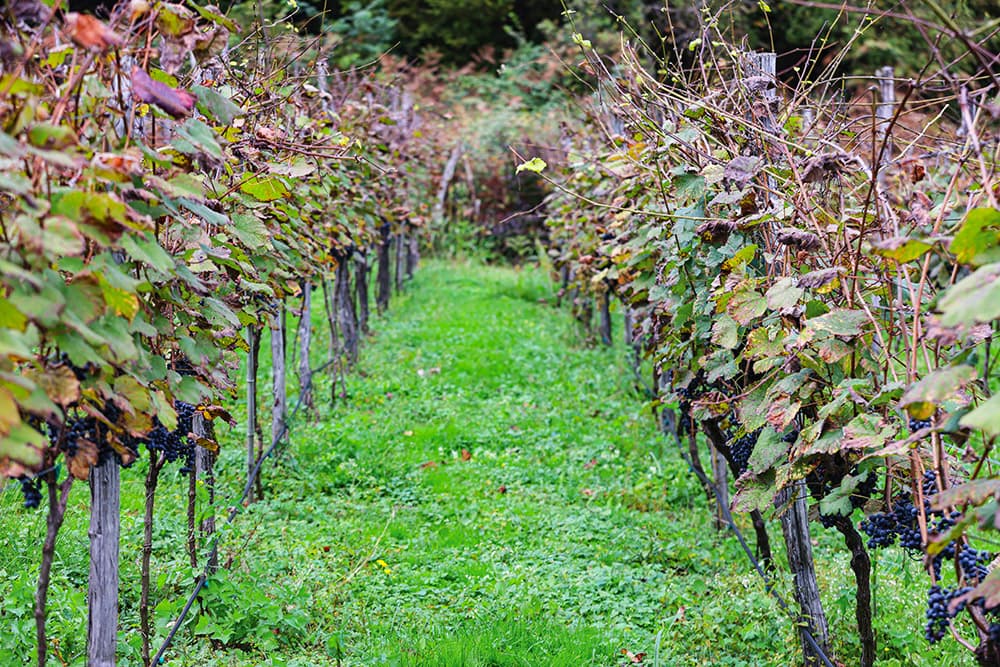

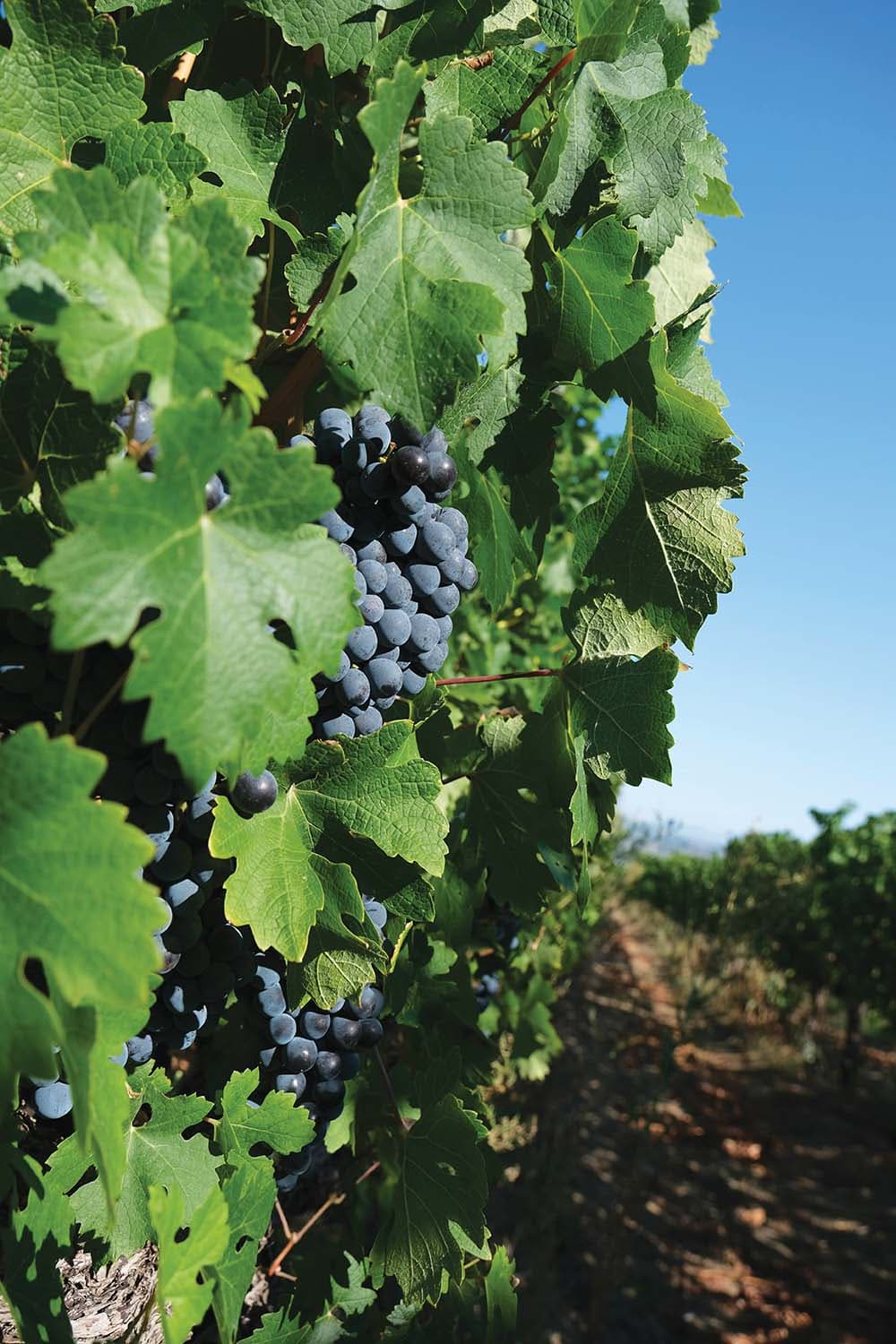
They are found on the lower slopes of Meskheti's picturesque mountains and foothills, as well as the valleys and floodplains of the Mtkvari, Kobliani, and Potskhovi rivers.
The famous Byzantine historian Procopius of Caesarea noted that as early as the 6th century, despite Meskheti’s mountainous terrain, its inhabitants, through their knowledge and hard work as skilled cultivators, had established orchards and vineyards, that enjoyed an abundance of fruit.
In his monographic work, Shalva Tsikvadze, a distinguished agronomist and a devoted figure in Meskheti’s viticulture and winemaking, discusses in detail the characteristics of the region’s agronomic and historical viticultural heritage across its various microzones. The established traditions of wine production in the area are clearly confirmed by the existence of the unique wine cellar in Vardzia, where around two hundred qvevri have been preserved.
According to the current Georgian vineyard cadastre, around 35.0 hectares of vineyards are recorded in the Meskheti viticultural zone. The majority of these vineyards (25.0 ha) are located in Aspindza Municipality, where the following autochthonous wine grape varieties are cultivated:
Meskhuri Mtsvane

is a local Georgian white grape variety. It belongs to the group of Meskheti grape varieties and is widespread in the Meskheti viticultural zone. The variety is characterised by medium yields and a late ripening period, reaching maturity in the Meskheti zone in mid-October. The sugar content of the grape juice ranges from 19.0% to 20.0%, while the acidity is between 8.5 and 9.0 g/l. Meskhuri Mtsvane is used to produce dry white wine and as a blending component in the production of sparkling wines.
Meskhuri Shavi

is a local Georgian red grape variety. It belongs to the group of Meskheti grape varieties and is widespread in the Meskheti viticultural zone. The variety is characterised by high yields (13.0 t/ha) and a late ripening period, reaching maturity in the Meskheti zone in mid-October. The sugar content of the grape juice ranges from 17.0% to 20.0%, while acidity is between 11.0 and 13.0 g/l. Meskhuri Shavi is a wine grape variety used for the production of dry red wine. The wine is characterised by a cornelian cherry colour and pleasant aromas.
Tamaris Kurdzeni (syn. Tamaris Vazi)

is a local Georgian red grape variety. It belongs to the group of Meskheti grape varieties and is widespread in the Meskheti viticultural zone. The variety is characterised by above-average yields (8.0 t/ha) and a late ripening period, reaching maturity in the Meskheti zone in the second half of October. The sugar content of the grape juice is 20.0%, while the acidity is around 15.0 g/l. Tamaris Kurdzeni is a wine grape variety used for the production of dry red wine.
Meskhuri Sapere

is a local Georgian red grape variety. It belongs to the group of Meskheti grape varieties and is widespread in the Meskheti viticultural zone. The variety is characterised by above-average yields and a late ripening period, reaching maturity in the Meskheti zone in the first half of October. The sugar content of the grape juice is 18.0%, while acidity ranges from 9.0 to 10.0 g/l. Meskhuri Sapere is a wine grape variety used for the production of dry red wine. The wine is characterised by a deep cornelian cherry colour, liveliness, and pleasant aromas.
Shavi Aspindzura

(named by the renowned scientist, Maksime Ramishvili) is a local Georgian red grape variety. It belongs to the group of Meskheti grape varieties and is widespread in the Meskheti viticultural zone. The variety is characterised by high yields (14.0 to 17.0 t/ha) and a late ripening period, reaching maturity in the Meskheti zone in mid-October. The sugar content of the grape juice ranges from 18.0% to 20.0%, while acidity is between 8.0 and 9.0 g/l. Shavi Aspindzura is a wine grape variety used for producing dry red wine. The wine is characterised by good quality, intense colour, freshness, and harmony.
Khikhvi (syn. Jananura)

is a local Georgian white grape variety. It belongs to the group of Kakheti grape varieties and is widespread mainly in the Kakheti viticultural zone. According to Ivane Javakhishvili (a prominent Georgian historian and founder of Tbilisi State University), its origins date back to the 3rd or 4th centuries. The variety is characterised by medium or below-average yields (4.5 to 6.5 t/ha) and a medium ripening period. The sugar content of the grape juice ranges from 23.0% to 24.0%, while the acidity is between 5.2 and 8.5 g/l.
Khikhvi is a high-quality wine grape variety, capable of producing wines using both classic (European) and Kakhetian winemaking techniques. It is also used to produce high-quality dessert wines.
Saperavi

is truly one of the most prominent representatives of Kakheti’s red grape varieties. In terms of distribution, it is also the most widespread red grape variety in Georgia, covering 17,953 hectares (National Wine Agency of Georgia, 2026). The variety is characterised by medium or above-average yields (8.0 to 15.0 t/ha) and a medium to medium-late ripening period. The grape juice is rich in polyphenolic and anthocyanin compounds, with sugar levels ranging from 20.0% to 26.0%, while the titratable acidity ranges from 7.5 to 8.5 g/l. Wines made from Saperavi are distinguished by their outstanding qualities. It is an excellent wine grape variety, with grapes ideally suited to producing a wide range of wine styles. Its wines are characterised by intense colour, body, fullness, harmony, and a complex bouquet that develops with age.
Given these considerations, it should be emphasised that the Meskheti viticultural zone, with its unique centuries-old traditions of viticulture and winemaking and its potential for producing distinctive wines, represents one of the most important components of Georgia’s viticulture and winemaking sector. Therefore, further research and introduction of autochthonous grape varieties in the Meskheti zone, alongside the development of the viticulture sector, will significantly contribute to promoting the region’s wine culture.