Georgians have long believed that using a variety of herbs and spices is essential to bringing out the full flavour of a dish. Just look at our culinary traditions, where fresh herbs are a cornerstone. Coriander, mint, thyme, pennyroyal, dill and other tender greens are used especially often. Since herbs are seasonal, Georgian housewives have always prepared ahead for winter. Even today, in almost every regional oda house (a traditional wooden home found across western Georgia), you’ll find bunches of dried herbs hanging from the ceiling beams: coriander, dill, thyme, mint, strings of dried peppers and more. The dried herbs are usually crumbled by hand and sprinkled over dishes just before serving.

In Samegrelo, for example, housewives prepare specific spice blends in advance for each dish: a mix for beans, one for kharcho soup, a minty blend, and a walnut-based mix called kachabe. The word suneli (spice) likely comes from suni, meaning smell, as we first perceive aromas through the nose then with our taste buds.
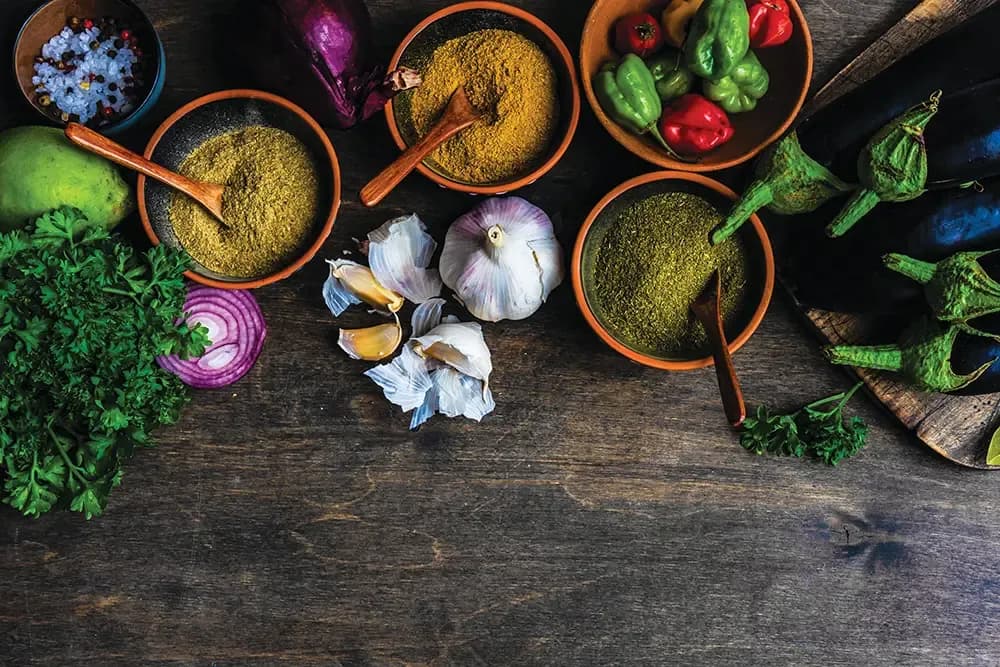
A Megrelian housewife pays close attention to three key elements: the appearance, the aroma, and the taste of her food. She spares no effort in preparing fragrant spice blends. First, she dries various fresh herbs, then crushes them in a wooden mortar (or sometimes, a meat grinder), before adding garlic, salt, and pepper. That’s why the aromas in her kitchen are always something truly special.
The herb known as utskho suneli (foreign spice) is made from blue fenugreek. Many might not realise that this is a beautiful plant, known to us in its dried form as utskho suneli. Along with coriander and pepper, it is one of the key ingredients in the spice mix used for meat. Add a little thyme and you have the perfect blend for jurjani and kupati sausages. To season lobio (bean stew), the same mix is combined with basil or zafran (also known as marigold), creating a completely new layer of flavour.
This meat spice blend is similar to Abkhazian ajika (a spicy red pepper paste). The word ajika comes from the Abkhaz phrase achei jika, meaning bread and salt. No Abkhazian feast is complete without it. To give it its signature spicy kick, red peppers are roasted over medium heat (when well dried and roasted, they withstand heat and store well). Then they’re ground on a special stone called akhakia, before garlic, utskho suneli,crushed coriander, and salt are added and stirred for a long time. Some housewives add water to make the ajika a more paste-like consistency. It’s excellent when served alongside beef, rooster meat, and ghomi(cornmeal porridge).

The minty spice blend is used for gebzhalia or nadughi cheese: fresh mint, coriander, green pepper, salt, and sometimes garlic. These ingredients are kneaded into cheese that has been softened in hot water, resulting in a soft springtime dish. If the same blend is stirred into nadughi or mixed with crumbled cheese, it becomes puchkholia, an inseparable companion to ghomi and mchadi (cornbread). When preparing kharcho(stew with walnuts) with chicken, beef, or duck, it’s the spices that bring out the best flavours: coriander, utskho suneli (blue fenugreek), zafran (marigold), garlic, and ground walnuts thinned with a little water or broth. Georgian cuisine is unthinkable without walnuts and hazelnuts, and spice blends based on these two ingredients can be found in almost every region of the country. In Samegrelo, for instance, it’s calledkachabe, while in Guria the blend is known as Gurian spice: fresh coriander (ideally with coriander seeds still attached), young green pepper, mint to taste, garlic, salt, hazelnuts, and walnuts, all crushed together in a mortar.
It’s also essential to mention the unique Svanetian Salt. In global cuisine, it is extremely rare to find a spice blend that complements every kind of dish, including meat, vegetables, dough-based foods and porridges. The Svans are the ones who created this extraordinary and versatile seasoning, known for its unforgettable flavour.

To make it, coarse salt is mixed with garlic, dry coriander, utskho suneli, dill, marigold and pepper. These ingredients are crushed together for a long time in a wooden mortar called a rodini to create a uniform, moist mixture. The timing of harvesting and drying the herbs, as well as the precise proportions, are of great importance. Every housewife has her own unique recipe for this aromatic seasoning, adjusting the ingredients depending on the dish she plans to prepare. For example, when making kupati sausages or ziskhora (blood sausage), thyme is added to the Svanetian Salt, while for kubdari it is enhanced with cumin (gitsruli).
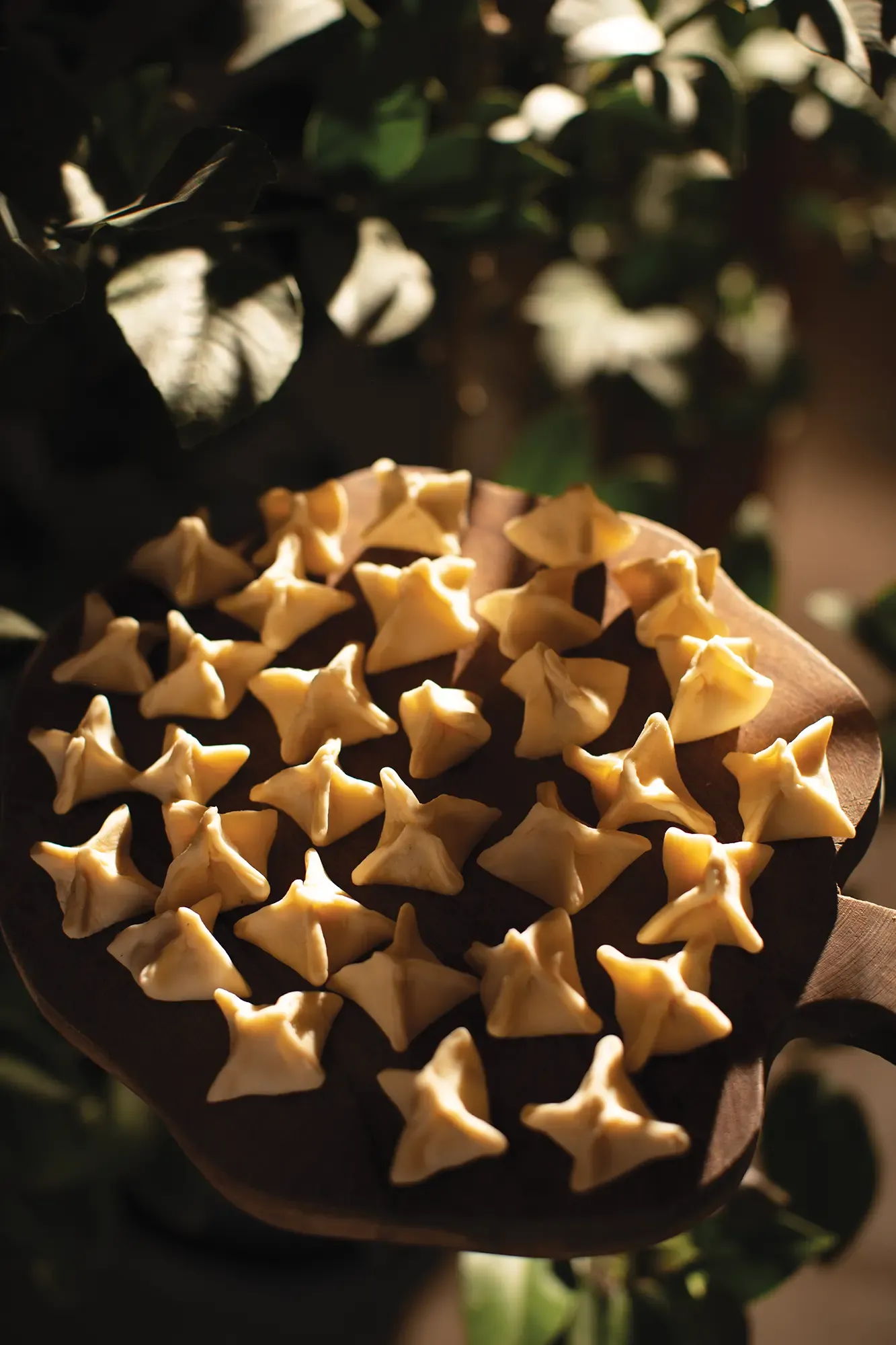
Travelling through the mountains of eastern Georgia, you’ll encounter an even more fascinating variety of wild herbs — including thyme (begkondara), Persian cumin (kvliavi), water thyme (tsklis kondari), and mint. The use of these herbs as ingredients in khinkali (juicy meat dumplings) depends both on the season and the housewife’s taste preference. Some say: without Persian cumin, it’s not really khinkali; without coriander, kaurma (meat stew) just won’t do; bozbashi (meat and vegetable stew) lacks flavour without mint; and shila plavi (meat pilav) is never eaten without cumin.
In Meskheti, you’re bound to come across cinnamon, which probably arrived from eastern cultures and then became established here. You’ll also find it in Guria, where the Gurian satsivi (poultry in walnut sauce) owes its rich, festive flavour to cloves and cinnamon. This spice, however, doesn’t appear in other Gurian dishes.
Sumac, also known as tutubo, is another spice introduced from the east that has taken root locally. It’s often confused with kotsakhuri (Berberis). Dried sumac goes perfectly with kebabs and other meat dishes.

For centuries, Georgia lay along a major transit route through which many spices, including cinnamon and sumac, were brought into the country. Among these, black pepper claimed an important place in Georgian cuisine. It’s used not only as a seasoning sprinkled over khinkali but also to enhance the flavour and aroma of various dishes, especially in eastern Georgia. Black pepper even stars in desserts- for example, Ajarian majuni relies heavily on it. The tradition of pairing black pepper with sweet dishes spans across centuries in Georgian cuisine.