Meskhetian gastronomy is a genuine discovery for the modern culinary world. Here, you will encounter techniques that today's leading chefs describe as innovative, such as complex fermentation, the use of temperature shock, or the zero-waste philosophy, which had long been part of life in Meskheti before becoming a global trend.

Tenili Cheese, Flavour and Spectacle
Tenili cheese is the jewel of Meskhetian gastronomy, a product protected as part of UNESCO’s Intangible Cultural Heritage. If you have seen the art of stretching Italian mozzarella, imagine a process that surpasses it a thousand times in complexity and visual appeal.

Locals will tell you that the secret of authentic Tenili lies solely in Meskhetian milk. The process begins with the curdling of milk and the production of delamo (the first cheese obtained from the curd). The matured delamo is melted in boiling water, and the magic begins: Meskhetian women use swift, rhythmic hand movements to stretch the hot mass.
The making of Tenili resembles a synthesis of sculpture and textile weaving, as with each stretch the strands of cheese double, become thinner, and eventually turn into the finest, airy threads of silk. However, the true gastronomic secret lies in the next stage: the slightly dried strands are dipped in cream, tightly packed into clay pots, a process that gives the cheese its name, and placed upside down on a bed of ash.
Ash acts as a natural dehydrator, absorbing excess moisture from the pot and creating an ideal environment for preserving the cheese. Tenili aged in this way can be kept throughout the winter and, over time, develops complex flavours of spice, mushrooms, and cream.
Pekhshumi, Ukhlavi, and Meskhetian Kada
If Meskhetian cheese is a work of art, the local baked goods are a true feat of engineering. Meskhetian khachapuri and kada differ significantly from their counterparts in other regions of Georgia, with the main focus here placed on the texture, thinness, and layering of the dough.

In a traditional Meskhetian home, a special low, round table known as a pekhshumi was used for this process (today, it is a rare ethnographic artefact). Sitting around the table, women worked the dough with an extremely thin, long wooden rolling pin known as an ukhlavi.
The dough, kneaded from flour, water, and a local sourdough starter, is so elastic that the artisan’s hand movements spread it across the table into an almost transparent layer as thin as a bed sheet. Then the culinary origami begins: the stretched dough is generously brushed with melted Meskhetian ghee or pork fat, rolled into a circle, filled with crumbled cheese (or, in the case of kada, with a fragrant filling of flour toasted in butter, known as the guli), and folded with geometric precision into a rectangular shape. During baking, the ghee separates the layers of dough, creating a crisp, multilayered texture that melts in the mouth.


Alpine Escargot: A Caucasian Endemic with French Influences
In the culinary world, snails (escargot) are considered synonymous with French cuisine; however, in Meskheti, this delicacy has a completely authentic, centuries-old history.
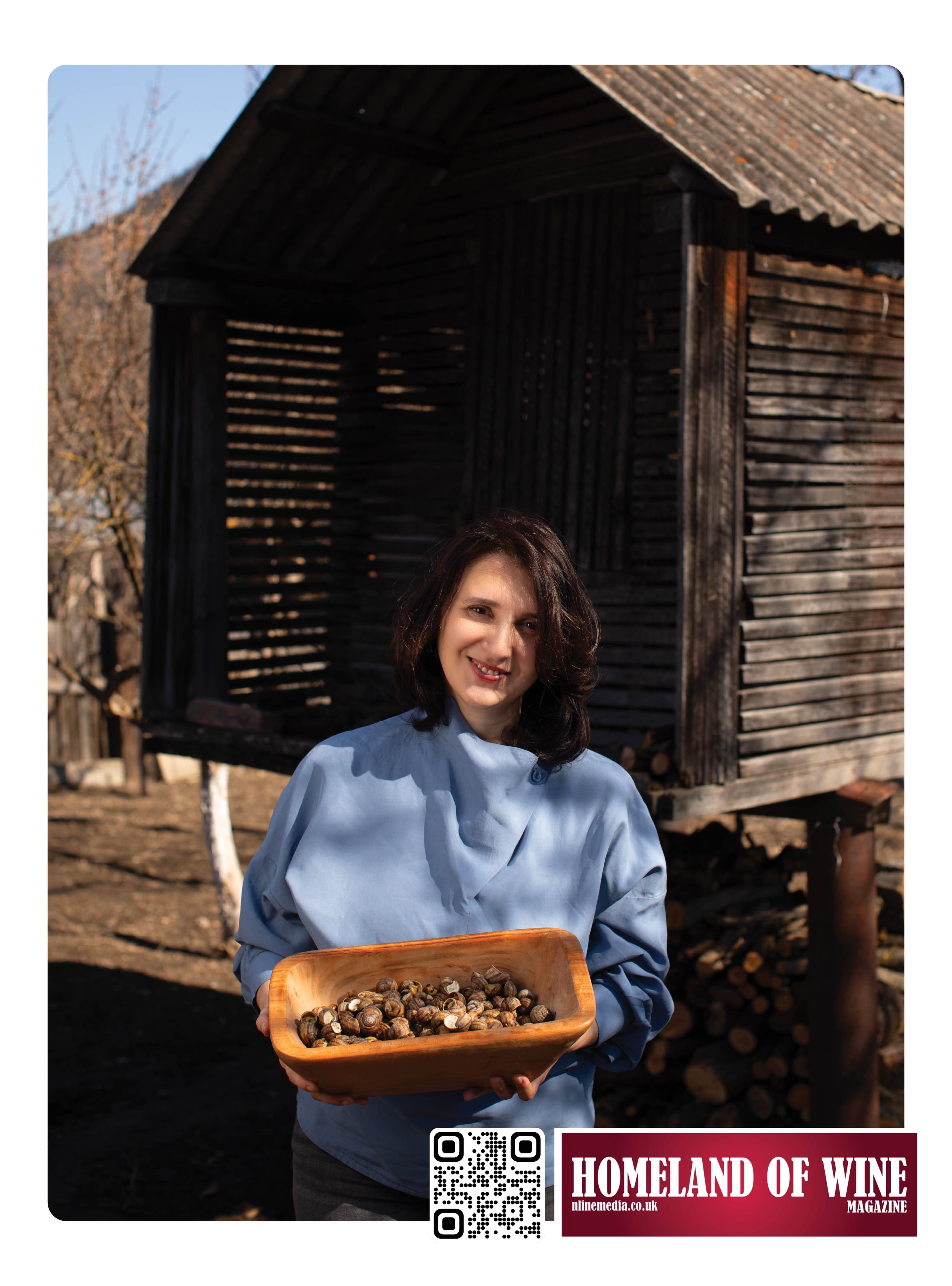
The Meskhetian snail is a Caucasian endemic species that lives and feeds only around the roots of the local thorny shrub known as glerdzi. It is this alpine plant-based diet that gives it its distinctive, clean, and mineral character. Locals collect the snails using special wooden sticks, wash them thoroughly, and boil them in water for 15 minutes, making it easier to separate them from their shells.

Traditionally, Meskhetians eat snails boiled in salted water or baked directly in a wood-fired oven. A local legend ties this unusual tradition to French Capuchin friars who travelled through Meskheti in the 17th century. When the friars discovered this unique endemic species, they are said to have taught local people about its culinary potential and methods of preparation. This is how alpine escargot emerged in the Caucasus Mountains, a dish that today would grace the menu of any Michelin-starred restaurant.
Apokhti and the Zero Waste Wisdom of Ancestors
A Meskhetian gastronomic journey is unimaginable without apokhti. The region’s harsh geography has taught people that preserving meat for winter is not a choice, but a necessity. Apokhti is goose or beef cured in salt and dried in the cold, pure air of Meskheti, with its intense, concentrated flavour reminiscent of Spanish jamón or Italian bresaola.

Goose apokhti forms the basis of two Meskhetian culinary masterpieces
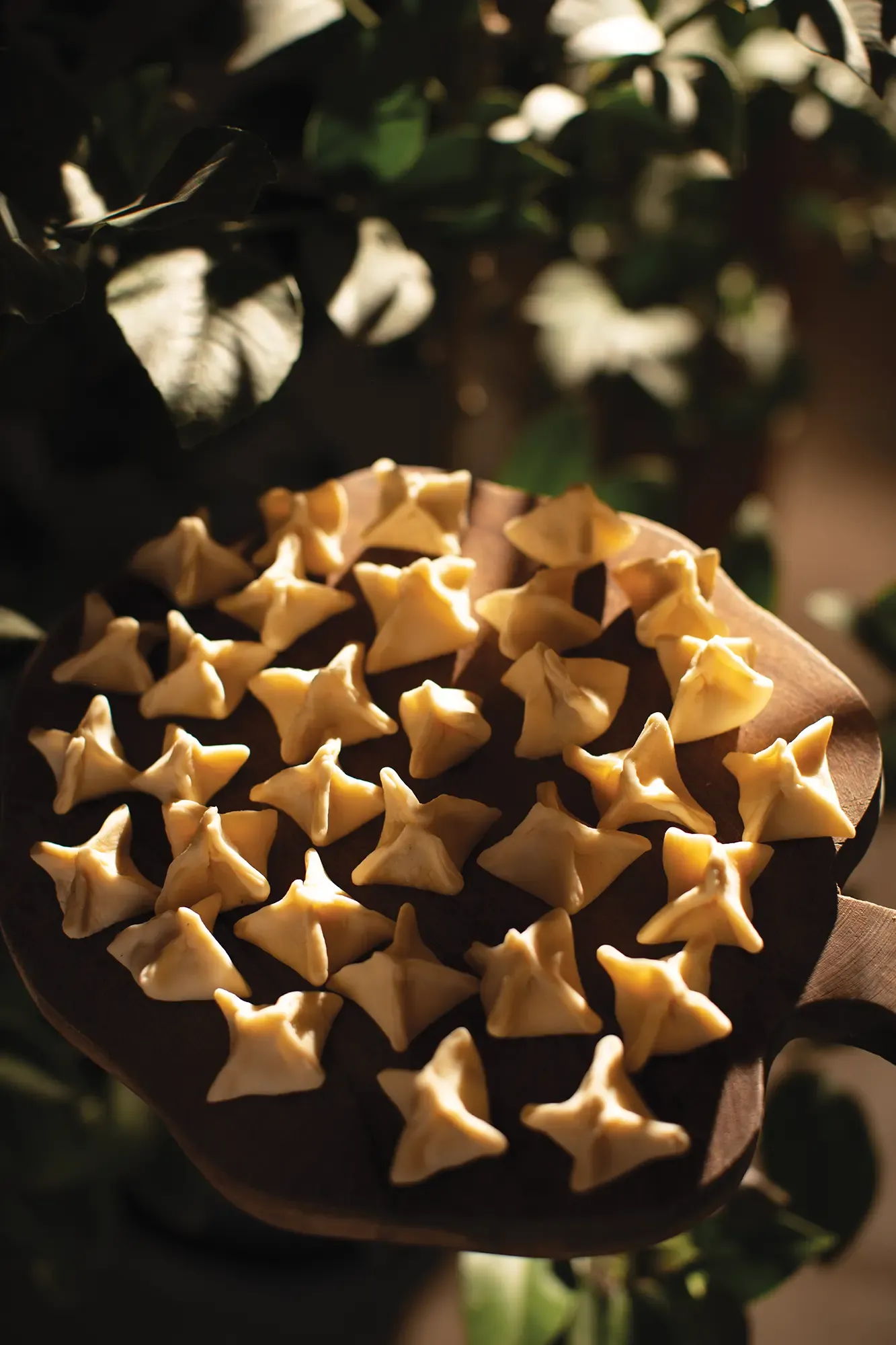
Apokhti khinkali is not a standard Georgian khinkali. The unleavened, firm dough is cut into small squares, filled with cubes of apokhti seasoned with onion and herbs, and folded not with the traditional khinkali top (kuchi), but into an elegant bow shape. These miniature bows, boiled in salted water, are arranged on a plate in a velvety matsoni (traditional yoghurt) and garlic sauce, then topped with crispy onions fried in ghee. The sensory contrast between the salty meat, cool matsoni, and hot ghee is remarkable.

When the main meat is sliced off the apokhti, Meskhetian cooks make sure that nothing goes to waste. A rich, concentrated broth is prepared from the goose bones. Coarsely ground, puffed wheat is then cooked in this broth, absorbing all the nuances of the meat. When served, plavi (puffed wheat cooked in meat broth) is topped with thin slices of apokhti crisped in ghee. It is a hearty, energy-rich dish that demonstrates how a single ingredient can be used to achieve maximum flavour and make full use of its potential.