
What shapes the choices of today's wine consumers, and what trends are emerging around the world? Why is wine consumption declining, and what cultural shift could help reverse the trend? Tazo Tamazashvili, Georgia's Best Sommelier and Wine Expert, discusses the challenges facing the wine industry, changing consumer behaviour, and the wine and food pairings favoured by the younger generation.

The forecasts surrounding declining wine consumption, rising prices, and changing consumer behaviour are a cause for concern among those working in the alcohol industry. International publications are devoting increasing attention to these issues. Producers are conducting market research and looking for a way forward. In reality, the younger generation is not losing interest in wine; rather, they are demonstrating different patterns of behaviour, and wine producers, including those in Georgia, need to adapt to these changes. The global decline in wine consumption is increasingly evident, with several key factors contributing to this trend.
The diversity of alcoholic beverages: Over the past decade, the market has become saturated with a wide range of cocktails and liqueurs, creating significant competition for wine. The growing focus on healthy lifestyles: Younger generations are consuming less alcohol, a shift directly linked to the wider trend towards healthier living. The transformation of dining culture: While wine was once closely associated with high-end restaurants, nowadays its consumption has moved into more informal settings, including bistros and wine bars.
The Changing Culture of Wine Consumption
In today’s reality, wine is moving away from its ‘elite’ image. It is no longer seen solely as an accompaniment to formal dining and traditional service. Wine consumption is increasing in bistros, gastronomic bars, and spaces where simplicity and comfort are at the centre of the experience.
All of this is, of course, reflected in the statistics. Even in places such as Bordeaux or in certain regions of Australia where traditional wine production remains dominant, sales figures have declined, suggesting that established models are no longer meeting the expectations of younger consumers.
For today’s consumer, the emotional experience is what matters most. They are not simply buying a drink; they are buying the feeling and story that come with the wine. They want to know how the vineyard is cared for, the winemaker’s approach, and the story of the family that creates the wine. They are increasingly drawn to natural wines, pét-nats, and rosé wines.


Another significant trend is the growing interest in natural wines. This trend aligns closely with the so-called ‘craft cuisine’ movement. Street food culture, including pizza, burgers, and Mexican-inspired dishes, paired with natural wines, is creating a new concept that feels more familiar and accessible to younger generations.
Yes, today wine co-exists naturally with contemporary gastronomic culture. A wide range of street food venues, bistros, and gastronomic bars have become ideal spaces for wine tasting. That is why we are also challenging traditional perceptions and exploring wine and food pairings in which wine works beautifully with less formal dishes.
The Values and Expectations of the Younger Generation
We should not forget that younger consumers are well-equipped with information. Modern technologies and social media platforms allow them to easily research a particular wine before making a choice. These consumers are looking for new flavours and experiences they have not encountered before. This is where an opportunity arises for regions like Georgia to introduce our ancient wine culture to modern consumers in a new way and offer them the excitement of discovery.
For today’s consumer, wine choice is no longer based solely on centuries of history or a high price tag. They are looking for authenticity and sustainability. They favour wines produced from vineyards cultivated using natural methods. We should also remember that label design plays a decisive role in the purchasing decision. Very often, it is the first impression and visual appeal that determine whether a consumer chooses to buy a wine.
Challenges for Georgian Wineries
Georgian producers must take global trends into account. Qvevri wine is our unique signature, but it is not the only wine style suited to everyday consumption. Alongside qvevri wine, it would be preferable to produce other high-quality wine styles as well, including dry whites, reds, and rosés, as well as traditional method sparkling wines.
Beyond international exhibitions, wine promotion should also take place at contemporary gastronomic festivals and events, where the culture of wine consumption and food pairing can be highlighted.
Wine and Food Pairings: A New Approach
For the modern consumer, wine is an integral part of food culture. Street food, pizza, burgers, and Asian cuisine are creating new and exciting opportunities for wine pairings. Among these, pizza is one of the most popular choices both globally and in Georgia. Pazza’s pizza stands out for its intriguing combinations of flavours and aromas, as well as its original approach, placing it closer to the gourmet category than traditional street food.
Aperitif and Appetiser
Pazza’s pizza with blue cheese and tarragon brings together a range of flavours that make it an excellent match for wine: the crispness and lightness of the dough, the blue cheese with its expression of umami, saltiness, and subtle acidity, the tomato sauce, and the Georgian element of tarragon, which enhances all these flavours. A good match for this pizza is a wine made from Zibibbo grapes grown on the western coast of Sicily. The wine is rich in intense fruit notes that work beautifully with blue cheese. Its lively acidity and salty character on the palate pair perfectly with the ‘spark’ of tarragon. Wines made from Western Georgian grape varieties, including Tsitska and Krakhuna, are also a good match for this pizza, with clearly expressed tropical fruit aromas.


Pizza and Rosé Wine - A Classic Pairing That Never Fails
When you are unsure what to pair with pizza, rosé is always a reliable choice. The combination of pizza and rosé wine has long been an Italian classic and remains one of the most popular and approachable trends in contemporary gastronomy.

In Pazza’s pizza with prosciutto and rocket, each ingredient plays its own role: prosciutto, a true pride of Italian gastronomy, adds rich savoury and meaty notes to the dish, while rocket adds a pleasant spiciness. This calls for a wine with refined texture, balanced acidity, and a gastronomic character. My choice fell on Puglia, a region where we find the rare Susumaniello grape variety, which produces excellent rosé wines: elegant, colourful and lively. This wine pairs beautifully with the saltiness of the prosciutto and the lightness of the pizza dough.
Nero d’Avola and Bolognese with meat cooked in qvevri-crafted Saperavi, stracciatella, and mint
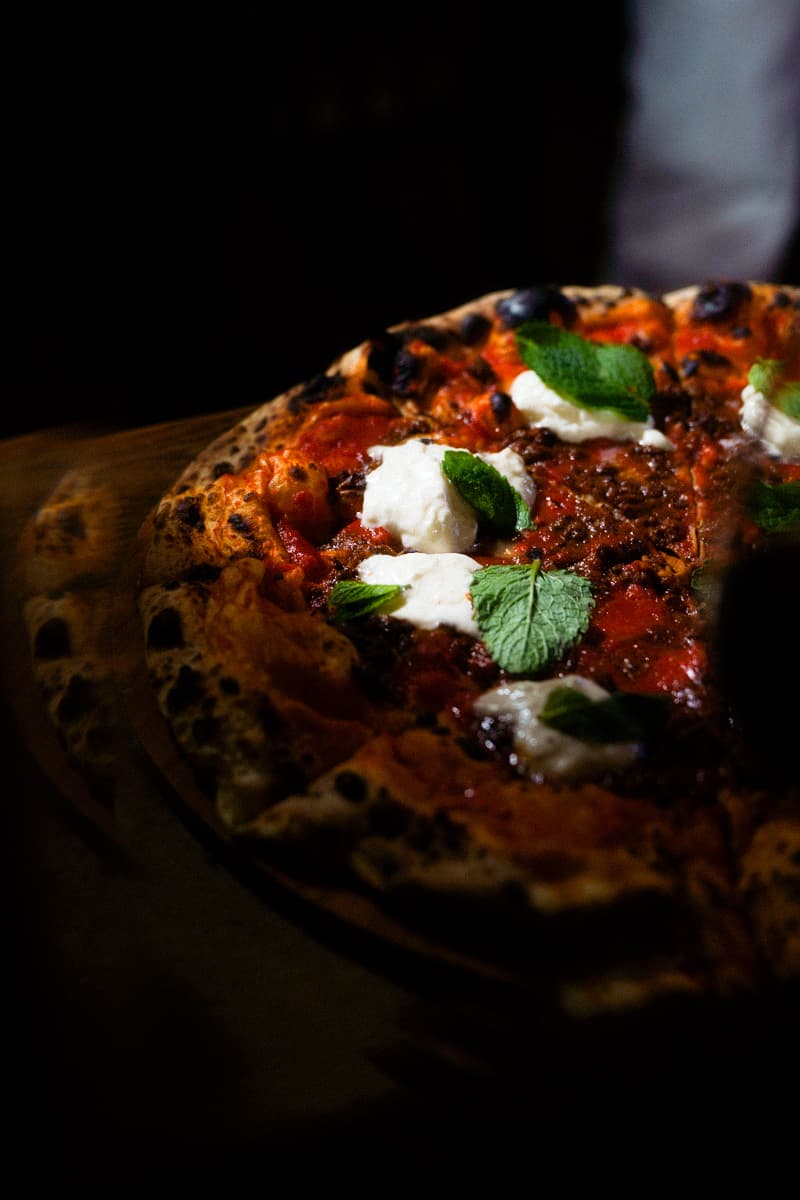
Creating an ideal wine and food pairing is often like composing a musical harmony. Take, for example, Pazza’s signature Bolognese pizza, where meat prepared in qvevri-crafted Saperavi takes on a completely new character alongside stracciatella and mint.


Stracciatella gives the pizza a creamy texture and delicate acidity, creating an ideal foundation for pairing with a medium- or light-bodied red wine. Nero d’Avola is exactly this type of wine. In this pairing, neither the wine nor the dish loses its character; on the contrary, they come together to create a new dimension of flavour, with the combination of stracciatella and mint adding a pleasant menthol finish. This pizza also pairs beautifully with Dzelshavi, the equally intriguing Shavkapito, or Aleksandrouli.