
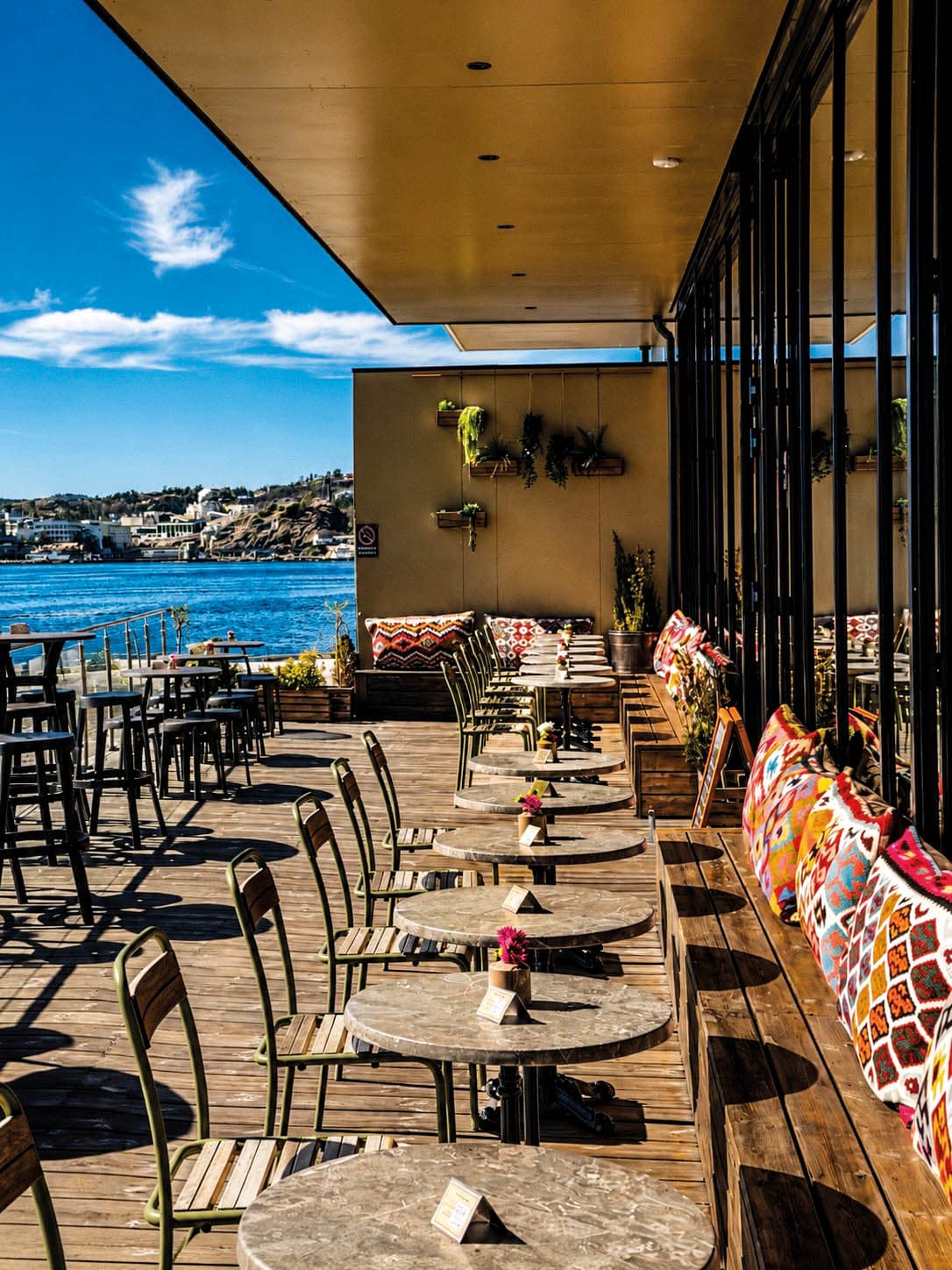
On the coast of the North Sea, in the Norwegian city of Kristiansand, there is a place where the clinking of glasses filled with Georgian wine brings a very different kind of warmth to the Scandinavian reserve. This is Gvino, a wine bar that is rewriting the story of Georgian wine in Norway.

Alongside Denmark and Sweden, Norway is one of the world's leading centres of gastronomy. Here, dining is almost a ritual, with every detail carefully considered. In any fine dining restaurant, the sommelier and chef select the wine to accompany each dish with utmost precision. Norway is also known for its excellent dry cider, made from premium apples, Aquavit- a spirit distilled from potatoes, and locally produced gin that has won international awards.
Although viticulture is only taking its first steps here due to the harsh climate, Norwegians are great admirers of wine. It is in this modern, competitive, and taste-driven environment that Natia Kurua has lived for almost 25 years. Together with her partners, several years ago, she established Gvino, a wine bar on the North Sea coast dedicated to Georgian winemaking, culture, and hospitality.

Gvino features more than 130 Georgian wines, from the refined wines of ‘Winiveria’ to the elegant selections of ‘Dakishvili Family Winery’, ‘Chateau Mukhrani’, ‘Gurashvili's Family Vineyards’, ‘Papari Valley’, and ‘Orgo’.
Georgian Wine on the Norwegian Market
It all began in 2017 at the Oslo Wine School. During one of the lectures, Natia learned that Egypt was considered the cradle of wine, with wine production dating back 5,000 years. Seeking to challenge this claim, she sent the lecturer an email with evidence and references confirming Georgia’s uninterrupted 8,000-year winemaking tradition, which led to changes being made to the course programme. This particular incident sparked a decision: if people in Norway knew nothing about Georgian wine, that had to change. At the time, only the wines of one winery, ‘Pheasant’s Tears’, were available on the Norwegian market.
‘I began looking for a reliable partner in Georgia. I needed not simply a producer, but someone who shared my vision of how Georgia should be represented on the Norwegian market.’ Zviad Gurashvili turned out to be exactly that kind of partner (Zviad is the co-founder of ‘Winiveria’ and the owner of ‘Gurashvili’s Family Vineyards’).
Natia then started negotiations with Norwegian wine importers. At first, no one showed much interest. One of her main targets was the wine importing company Non Dos (Non Dos AS), founded in 2006 and now one of Norway’s largest and leading importers of organic, biodynamic, and natural wines. In Norway, the state-owned Vinmonopolet holds the monopoly on alcohol sales. Accordingly, Non Dos supplies wines imported from various countries around the world, including Georgia, to both the state-run chain of shops and to restaurants, bars, and hotels.

Natia contacted one of Non Dos’s managers and told him directly: ‘You have two options: either you work with me, or I will become your competitor.’ This bold approach worked, and a partnership was established. In the first year, 2018, only four Georgian wines were introduced to the market, and around 340 bottles were sold. This figure was modest, but it represented the beginning of a significant undertaking. In the second year, the range increased to six wines, and later to eight.
Natia actively worked with Norwegian wine journalists. There is an unwritten rule in Norway’s wine market: if an influential critic gives your wine a positive review, sales are guaranteed. This proved to be the case, as interest and demand continued to grow daily. Soon, Vinmonopolet began recording steady sales figures.
30,000 Competitors and Amber Wine
The Vinmonopolet system is unique and yet unforgiving. This chain of shops sells every type of alcohol. Its database contains more than 30,000 wine listings. Imagine being a newcomer among 30,000 competitors. To establish yourself in such an environment, the right balance of attractive price, high quality, and distinctive taste is essential.
Through experience, Natia came to understand the strengths and weaknesses of Georgian winemaking in the Scandinavian market. In the category of classic white wines made using European methods, competing with the established wine industries of Germany, Spain, and Portugal is almost impossible, mainly due to pricing. The same applies to rosé wines.
However, Georgia has its own advantage: qvevri and amber wine, a distinctive product that cannot be compared with wines from any other country. Interest in amber wines in Norway continues to grow steadily. As for red wines, due to the country’s cold climate, they consistently rank first in sales. Saperavi is particularly popular, as it suits local tastes exceptionally well.
Natia Kurua: ‘In Europe, and especially in Scandinavia, consumers do not favour wines with high alcohol levels, such as 13%, 14% or 14.5%. For them, such wines are unacceptable and less appealing. If Georgian producers want to position themselves on the Norwegian market, they must consider this important detail.’
After years spent in Oslo and gaining experience in wine importing, Natia put her new idea into action in 2022: opening a Georgian wine bar in Norway. This is how Gvino appeared on the Norwegian coast, in the city of Kristiansand.

The main concept and pride of Gvino are Georgian wines, which Natia herself imports into Norway. More than 130 varieties of Georgian wine from different winemaking regions of Georgia are available here. The bar is seasonal: Kristiansand is a coastal city, so during the summer months, there is a constant flow of visitors. However, in winter, when the bar is a 20-minute journey from the city centre, it is difficult for guests to come only for wine. This is what created the demand for food as well. Georgian chef Giorgi Gogorishvili joined the team. Giorgi has experience working at a Lithuanian restaurant that received a Michelin star during his time there.


Today, three types of khachapuri are prepared here: Ajarian, Imeretian, and Giorgi’s own creation, with a meat filling. Each week, one new dish is added to the menu, such as lobiani or another traditional Georgian dish. However, for Natia, Gvino must remain a wine bar rather than becoming a classic restaurant. That is why the menu is carefully kept limited, allowing the venue to preserve its elegant, wine-centred atmosphere.
From 28 guests to a major wine festival
Gvino’s mission also includes an educational and promotional element. In Norway, advertising alcoholic beverages is strictly prohibited by law. It is impossible to share photos on social media or run traditional PR campaigns. Under these conditions, the only way to increase awareness is through tastings and festivals. This is how the idea of organising a Georgian wine festival in Oslo was born.


The first festival attracted a relatively small number of guests, and this number doubled in the second year. Later, when the Georgian National Wine Agency became involved, the event reached a completely different scale. Today, it has become an established annual festival, which, as Natia says, people look forward to and ask about well in advance.
A similar initiative soon followed in Kristiansand as well. In partnership with local sommelier Liam Parsons, Natia organises two wine festivals a year in this coastal city: one in spring (March) and one in autumn (September). These festivals also feature wines from countries around the world, with various importers taking part. ‘In this case, our goal is to encourage people’s interest in wine in general, rather than promoting only Georgian wine.’