Leaving behind the bustle of Tbilisi and heading towards the village of Mukhati in Kvemo Kartli, just twenty kilometres from the capital, the air seems to change instantly, becoming infused with a sense of history. This is historic Sabaratiano, a region that for centuries was one of Georgia’s most important political, cultural, and agricultural centres.


However, the significance of this area extends beyond this alone: near Mukhati lies Gadachrili Gora, the cradle of world winemaking and an archaeological site of exceptional importance, where traces of winemaking culture, dating back 8,000 years, have been discovered.
It is here, at the heart of this ancient culture, that Marabda Field unfolds before us, a place where an epic battle took place in 1625. Yet today, this field, once the scene of warfare, is preparing for an entirely different kind of victory. At an altitude of 550 metres above sea level, a new chapter in the winemaking history of Kvemo Kartli is being written. We aim to explore this story, which leads us to the Marabda Valley wine company, to encounter the fascinating wines of Kvemo Kartli.
Awakening of Genetic Memory
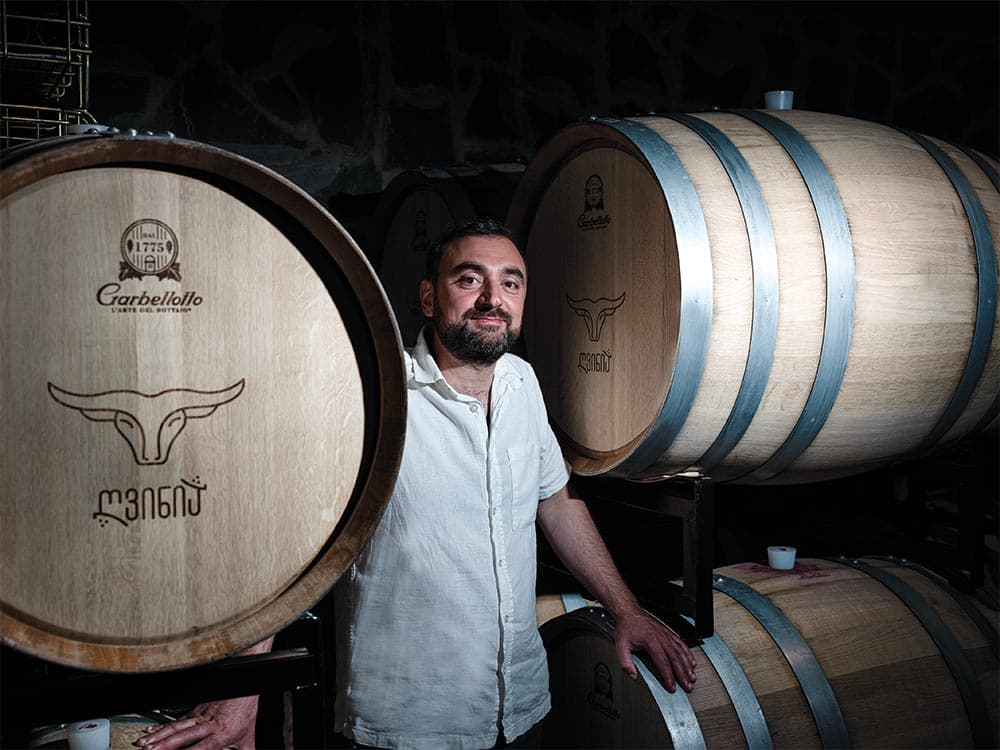
On the path leading to the vineyards, we meet the founder and owner of the winery, Bondo Davitashvili. From his very first words, it becomes clear that this work represents an awakening of genetic memory for him. Bondo’s ancestors were winegrowers who, in the 19th century, also had business ties with the German colonists who settled in the area.

‘When I was a child, in the late 1970s and early 1980s, the vineyards here were planted mainly with Georgian white grape varieties. Even so, I often heard people speak of an exceptional Saperavi that grew on this land,’ Bondo tells us as we walk between the vineyard’s neatly aligned rows. ‘Later, the Communists moved this variety to Kakheti because there were no irrigation systems here. It was thoughts of that Saperavi that became one of the main reasons why we decided to plant vineyards here.’
The Architecture of the Soil
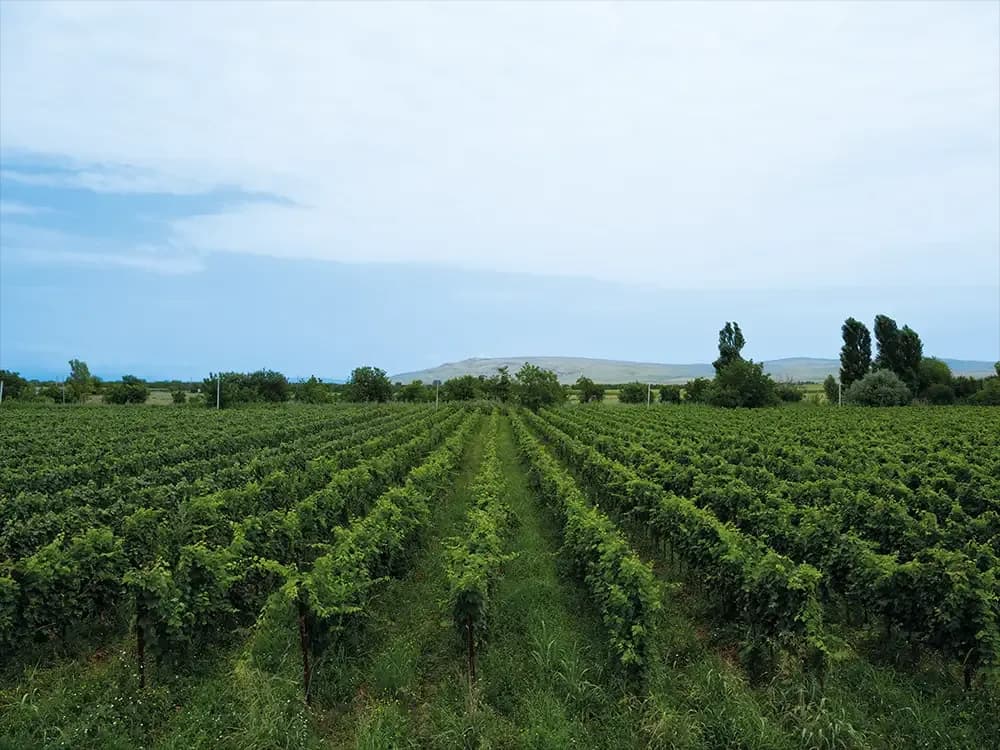
The winery’s vineyards extend across 8.5 hectares. Everything here has been carefully planned: the rows are spaced 2.5 metres apart, the vines are planted 90 centimetres apart, and the trunks are trained to a height of 85 centimetres, ensuring good air circulation. However, the real secret lies in the soil itself, in its layered profile that extends five metres below the surface. Beneath the surface clay loam lies a layer of limestone 10 to 20 centimetres thick, followed by chernozem. This sequence repeats several times as the profile descends. The structure is entirely logical, given that the mountains of Kojori, rising to 1,450 metres, lie just a few kilometres from the vineyard. Over thousands of years, water has carried mineral-rich deposits down from these slopes, creating ideal terroir conditions for vine cultivation.


Today, four Georgian and two international grape varieties thrive in this soil: the Georgian varieties are Chinuri, Goruli Mtsvane, Shavkapito, and Saperavi, along with two French varieties, Chardonnay and Pinot Noir.
Climate as a Co-Author: A Philosophy of Minimal Intervention
‘One of our greatest climatic allies is the north-western wind, which is effectively a natural form of sanitation,’ says Bondo as we walk along the rows of Chinuri. ‘It ensures good ventilation in the vineyard and allows us to reduce spraying by 30 to 40 per cent. We are perhaps among the most forward-thinking wineries in this regard, as we aim to stay well ahead of the times. We do not even use some of the preparations that are officially permitted in Georgia, but are due to be banned in Europe in the coming years under stricter regulations. What European standards are introducing for tomorrow, we have already completely removed from our practices over the past year and this year. It is through this minimal intervention, combined with strict and sensible control, that we achieve the highest quality harvests.’

The Story of Classic Wines, Beginning at Dawn
The distance from the vineyard to the winery, whose architecture is particularly interesting, is just 10 metres. This seemingly minor logistical detail provides a significant technological advantage. Here, they can begin picking grapes at dawn, as early as 6:00 in the morning. Grapes picked on a cool morning quickly reach the winery, preventing overheating during transport and preserving their firmness and the delicate primary aromas that are fundamental to making wine using the classic (European) method.

This brings us to the central concept: Marabda Valley is firmly focused on classic, modern wines. Although Georgia is known around the world primarily for qvevri and amber wines, Bondo and his team firmly believe that Kartli is ideally suited to producing premium European-style wines.
Misha Meskhi | Oenologist, Wine Expert
‘Those of us working in the field of winemaking try to view Georgian wine in the long term. We are aware of our 8,000-year history, and yet looking ahead into the future is far more difficult. Nevertheless, we often encounter carefully planned, disciplined, and unhurried approaches to the craft, which seem to offer a clear glimpse of where the industry is heading.
Marabda Valley is precisely this kind of wine company: it is seeking, and will undoubtedly create, a new Georgian niche in the already crowded world of wine. The company’s comprehensive approach is clearly evident: the minimalist yet captivating architecture of the winery, its carefully considered scale, outstanding wines shaped through measured and in-depth experimentation, and a young team bringing all of this to life.’
Mariam Khomasuridze | Oenologist. Professor at Georgian Technical University
‘Marabda Valley is a quality-focused winery where Georgian wine is born from the synthesis of centuries-old tradition and modern oenological approaches. The producer has successfully taken on the challenging task of defining the right stylistic direction for its wines. Each wine from the winery clearly reflects the individuality of the grape variety and terroir. For me, Marabda Valley was a true discovery: another outstanding location for Saperavi, giving rise to a wine with body, complexity, and rich varietal aromas.’
The company also respects tradition: a range of amber wines will soon be introduced to consumers, offering a completely new perspective on the terroir potential of Marabda Field. However, today its classic wines are already receiving international recognition at leading competitions such as the Decanter World Wine Awards, Concours Mondial de Bruxelles, and IWCS.


A vineyard planted using modern techniques and carefully tended, state-of-the-art grape reception equipment in the winery, almost fully computerised refrigeration systems, oak barrels in which white wines mature for several months and red wines for up to a year and a half, and developing a refined structure, all form the technical foundation behind the creation of Marabda Valley wines. The winery is also equipped with distillation equipment used for producing premium brandy and oak-aged chacha from grape pomace and lees.


The People Behind Marabda Valley Wines
Behind these wines is a seven-member team, whom Bondo speaks about with particular warmth. It is an ideal synthesis of generations and knowledge: Bondo’s brother, Lasha Davitashvili, the company’s manager and a dedicated caretaker of the estate; Goga Zirakishvili, winemaker and graduate of the Agricultural University, his wife Ani Varamashvili, who heads laboratory work and quality control; and Lasha Bibilashvili, a winegrower and winemaker educated at the University of Neustadt in Germany. The team also includes Devi Euashvili and Zviad Muradashvili, who have been involved in Marabda Valley’s activities since the beginning. Here, each wine is created collectively, through discussion and the sharing of knowledge.
Marabda Valley Wines
Chinuri | Classic dry white wine
This wine captures the natural freshness and delicacy of Chinuri with remarkable precision. Its transparent straw colour is complemented by an elegant, medium-intensity bouquet dominated by notes of white fruit and meadow flowers. It has a refined, light structure, crisp acidity, and a harmonious, refreshing character.

Chinuri/Goruli Mtsvane | Classic dry white wine
Created using the classic (European-style) method, this wine preserves the natural primary aromas of both endemic grape varieties. With a bright straw colour, it displays a medium-intensity bouquet dominated by delicate notes of white fruit and meadow flowers. It has a lively, energetic character, pronounced acidity, and a long finish.

Pinot Noir | Classic dry red wine
A classic dry red wine with a light garnet colour. It displays well-defined aromas of red fruits, particularly blackberry and raspberry, complemented by notes of fresh green herbs and violet. Medium-bodied, it is characterised by pronounced acidity, balanced tannins, and a long finish.

Saperavi | Classic dry red wine
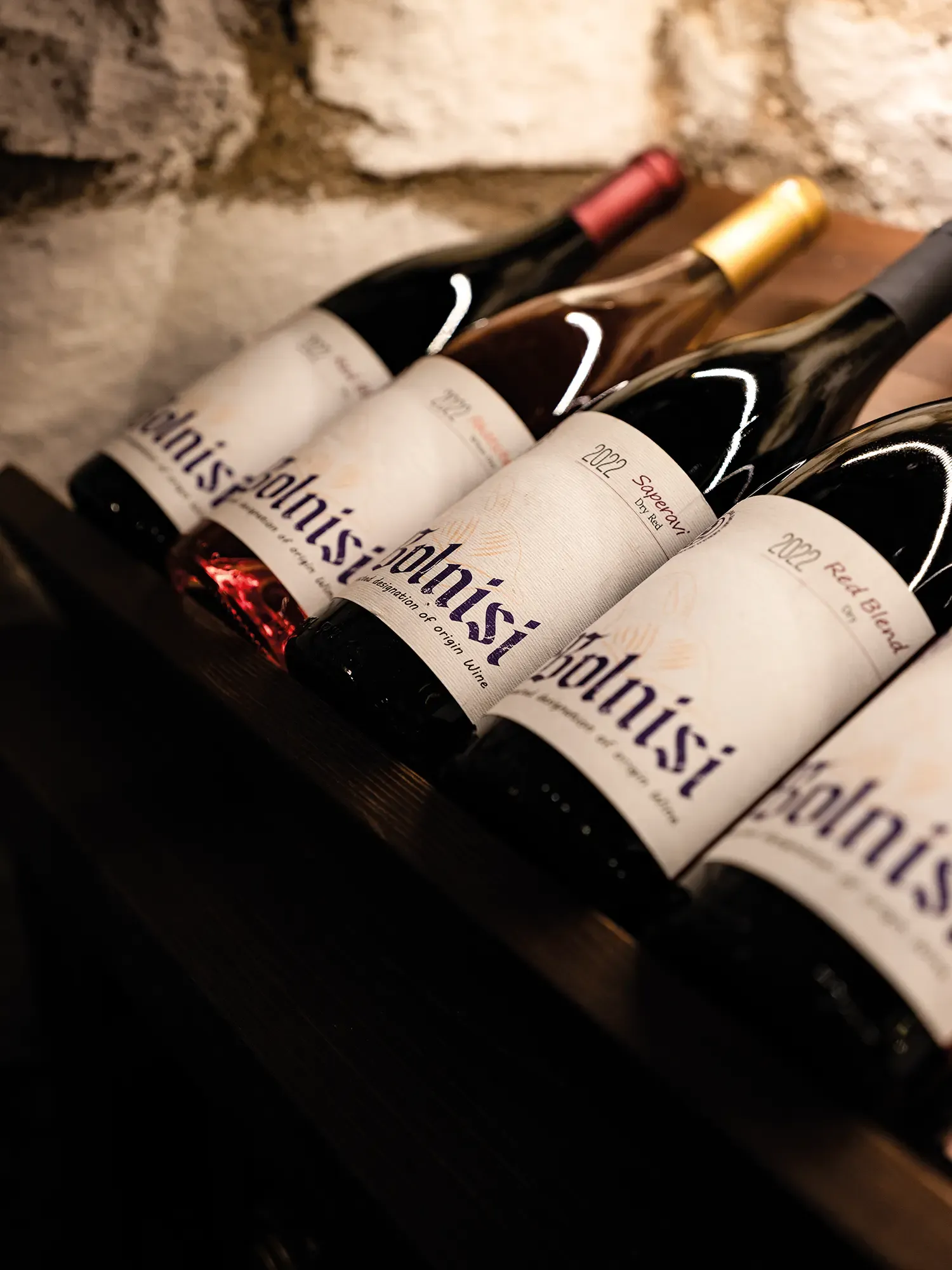
This classic red wine, with a deep ruby colour, perfectly expresses the character of its terroir. Its aromatic profile is led by cherry and plum notes, which are harmoniously complemented by delicate hints of black pepper. On the palate, the wine is structured and balanced. Its long finish highlights the varietal depth of Saperavi beautifully.

Saperavi Premium | Classic dry red wine
This deep ruby-coloured Saperavi, made using the classic method and aged in oak barrels, is complex and full of character. Oak ageing has given the wine a particular elegance and aromatic depth. Delicate vanilla notes characteristic of oak ageing and spice aromas are harmoniously integrated. On the palate, it is balanced, with a long and memorable finish.

Shavkapito | Classic dry red wine
Made using the classic method, this deep garnet-coloured wine is distinguished by a complex bouquet, where piquant spice notes take centre stage. It has a medium body with soft and velvety tannins. This ancient grape variety from Kvemo Kartli is beautifully expressed in Marabda Valley wine.

Chardonnay | Classic dry white wine
This French grape variety develops an intriguing character in the Kartli region, which is faithfully preserved in this wine made using the classic method. This light straw-coloured Chardonnay has a refined aromatic bouquet filled with floral and white fruit notes. It is fresh, lively, elegant, and well-balanced.

The Bigger Picture: Steps Towards a Shared Regional Identity
As we sit in the tasting room enjoying Saperavi, we discuss the future of the winery. Bondo shares his plans to offer visitors distinctive food pairings featuring the regional cuisine of Kvemo Kartli alongside their wines in the near future. His vision, however, extends beyond the walls of his own winery. As a board member of the Kvemo Kartli Wine Union, he is thinking about the region’s broader development: ‘Today, the Union brings together winemakers from Bolnisi, Tetritskaro, and Marneuli. Although Marabda Valley has already established itself as one of the region’s leading wineries through the quality of its wines and its technical capabilities, the success of a single winery is not enough. No matter how good our wines are, it is essential that many more high-quality wines, even wines that surpass our own, are produced in this region. Our main goal is to build a shared regional identity. When people taste a wine from Kvemo Kartli, we want them to make a clear association: this is a region where wines of the highest quality are produced. Together, we can achieve that more quickly, which is why we are always open to collaboration and the sharing of knowledge.’